
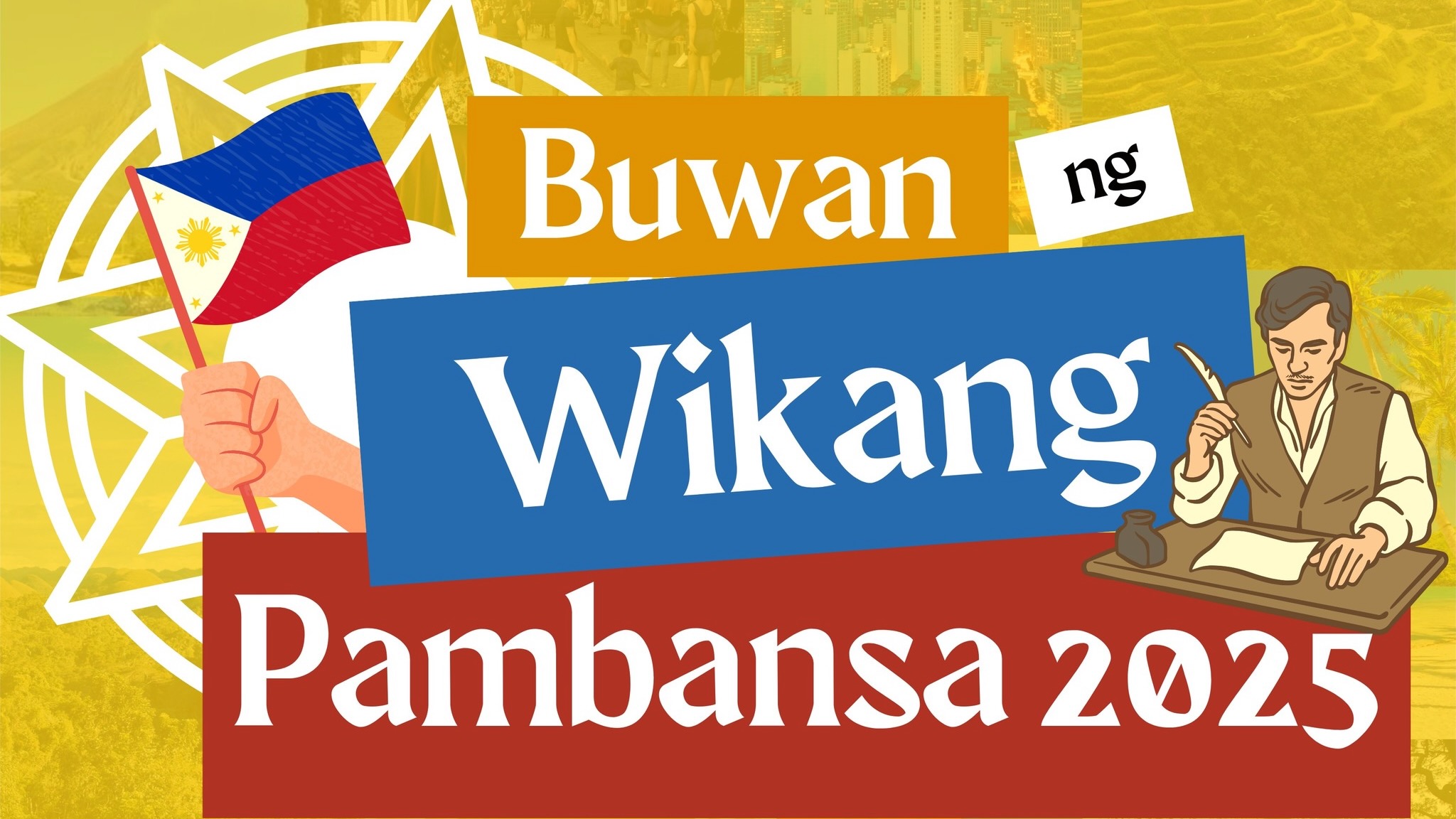
Every August, students across the country slip into traditional garb, sway to folk dances, and sing timeless Filipino tunes to celebrate Buwan ng Wika. It’s a familiar scene for many, often steeped in nostalgia. But beyond the colors and choreography, a deeper question lingers: Is this celebration still meaningful to today’s youth?
The observance began as Linggo ng Wika in 1946, a week-long celebration tied to the birthday of Francisco Balagtas. Then President Ramon Magsaysay moved it to August 13–19 in 1955, aligning it with President Manuel L. Quezon’s birthday and ensuring school participation.

Finally, in 1997, President Fidel V. Ramos extended it to cover the entire month of August under Proclamation 1041, officially renaming it Buwan ng Wikang Pambansa.
This year’s Buwan ng Wika 2025 theme is “Paglinang sa Filipino at Katutubong Wika: Makasaysayan sa Pagkakaisa ng Bansa.” This theme highlights the important role of Filipino and indigenous languages in promoting national identity and unity through shared history and language development
In recent years, the Komisyon sa Wikang Filipino (KWF) has broadened the celebration’s scope to emphasize indigenous languages alongside Filipino, recognizing a multilingual identity across the archipelago.


While Buwan ng Wika continues to bring language pride to schools, critics argue that it often feels performative—brief bursts of patriotism followed by months of silence. Classroom dances, poem recitals, and costume parades can be fun, but they seldom invite deeper reflection on linguistic diversity and cultural identity.
To change that, The Manila Monitor suggests youth-focused initiatives like language immersion clubs, social media challenges in regional tongues, storytelling circles with elders, and digital projects that document endangered languages. Schools can also integrate Tagalog and regional languages beyond primary years, promoting real usage, not just display.
Another key aspect that deserves more attention is Baybayin, the ancient script used by pre-colonial Filipinos. While there have been efforts to revive it, Baybayin remains largely absent in mainstream education. Promoting awareness and teaching of Baybayin—not just as a novelty but as a valuable cultural artifact—can help today’s youth connect with their linguistic roots in a deeper, more visual way. It’s a reminder that our language system existed long before colonization and continues to evolve.

Language expert commentary and recent KWF themes emphasize that Filipino and local dialects are tools for social inquiry and community resilience. After all, language isn’t just grammar, but memory, worldview, and identity.
It’s easy for Buwan ng Wika to be reduced to school programs and costume parades. But there’s an opportunity here to make it more meaningful—not just in classrooms, but beyond them. What if there were more mainstream, more interesting initiatives for working professionals, out-of-school youth, or communities who no longer engage with language on an academic level?
Language is alive, after all. It deserves space outside textbooks and speech contests. If we make room for all Philippine languages—not just Filipino, but regional dialects and even scripts like Baybayin—we give more people a reason to reconnect with where they come from. And maybe then, Buwan ng Wika can grow into something lasting. Not just a tradition observed every August, but a continuing effort to keep our languages—and stories—alive.