
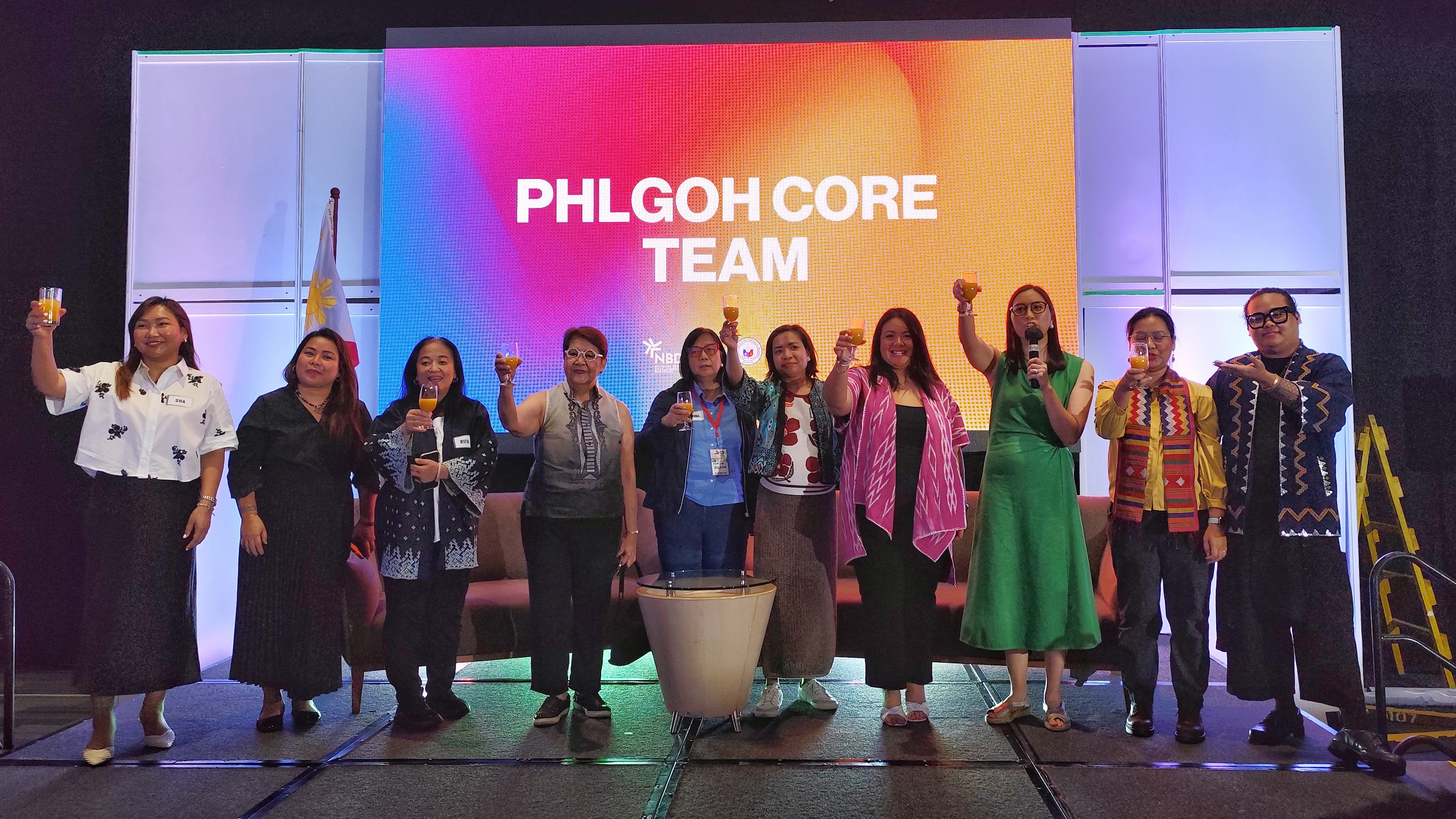
The National Book Development Board (NBDB) gave publishers, authors, and industry partners a first look at the Philippine pavilion for the Frankfurt Book Fair 2025, where the country will be Guest of Honor—a distinction regarded as the “Olympics” of publishing.
Held during the Manila International Book Fair 2025, the send-off event doubled as both celebration and challenge, reminding the community of the historic moment ahead. As Guest of Honor, the Philippines will not just participate but take center stage, a privilege usually reserved for nations with decades of groundwork.


The pavilion, conceptualized under the artistic direction of Dr. Patrick Flores, draws from the imagery of Philippine waters and the nation’s archipelagic landscape. Its structures, arranged to evoke islands adrift in openness, are meant to embody aliwadas—a Visayan word that connotes airiness, generosity, and expansiveness. Flores described it as a space that honors “the gifts of writing and meaning in a hopeful world.”
Screenshots of the pavilion revealed a modern, fluid design, with spaces dedicated to different aspects of the industry. The Philippine stand will include three main areas: a business hub for meetings, a showcase of the country’s comics tradition, and an exhibition space for featured titles and authors. The installation begins in early October in time for the fair’s opening on October 15, 2025.

For NBDB chair Charisse Aquino Tugade, the Guest of Honor role is more than a ceremonial spotlight—it is a platform to correct imbalances in the industry. Tugade emphasized that Filipino children still grow up surrounded by imported titles, while books written in their own languages remain scarce. “We really want our children to have books that they read in the languages that they speak.”
Through initiatives like the Book Nook program and the Philippine Book Festival, NBDB has been expanding access at home while also preparing local publishers to compete internationally. Tugade sees Frankfurt as the next step: “Our stories are not represented, so we want to enter [the international market]. It will grow the publishing industry because not only can they sell in the Philippines, they can sell in different territories.”

From queer literature to folk mythology and working-class narratives, Filipino voices are finding interest abroad, particularly in Europe and Southeast Asia. “People love that stuff,” Tugade said, calling this moment an opportunity to prove the Philippines can be a creative powerhouse on the global stage.
“Success means collaborations between international publishers, the right sales, and bringing in the best globally so we can be competitive,” she said.
While Philippine literature has yet to establish itself as a powerhouse on the global stage, the Guest of Honor status signals an opportunity to change perceptions. Delegates acknowledged the challenges—costs, visibility, and limited international recognition—but also highlighted the talent and stories waiting to be discovered.
The goal is simple—to make the Philippines shine when the world’s eyes turn to Frankfurt.